projects

Gakusei Jikken Shitsu  学生実験室

GAKUSEI JIKKEN SHITSU 学生実験室

'HEKIZAN'

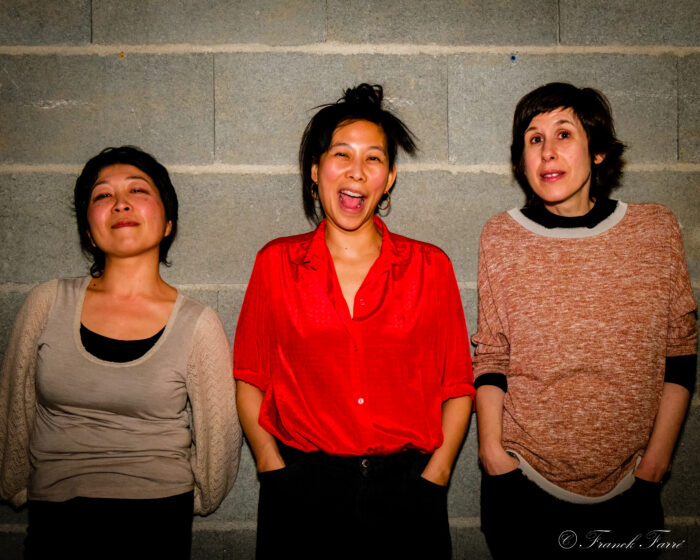
The three musicians met in a studio in Nagoya in 1998 and formed the trio with the intention of conducting musical “Jikken” (experiments), guided by the spirit of “Gakusei” (students). The group performed and recorded regularly until 2000, when Yuko Oshima left the band to move to France. The trio continued working with other musicians before eventually disbanding in 2006. Despite this pause, the three original members continued to collaborate and perform together outside the group.

They reunited in 2014 and decided to record a new album. Titled Hekizan, it was released in 2017 by the French label Bam Balam Records (BBLP045). Since then, the trio has remained active, performing regularly in Japan — especially in Nagoya, their home base. They will make their first appearance in Tokyo in April 2026 at an event entitled “Skript.”


Les trois musiciens se rencontrent dans un studio à Nagoya en 1998 et ils forment le trio afin de faire des ‘Jikken’ (expériences) musicales avec l’esprit de ‘Gakusei’(étudiants). Le trio s’est produit en concert et a enregistré régulièrement jusqu’à l’année 2000 où Yuko Oshima quitte le groupe pour partir en France. Le groupe continue avec d’autres musiciens mais s’arrête en 2006. Malgré cet arrêt, les 3 musiciens continuent de jouer ensemble en dehors du groupe. Ils se réunissent à nouveau en 2014 et décident d’ enregistrer un album.  L’album s’appelle ‘Hekizan’ sort en 2017 d’un label français Bam Balam.Records (BBLP045) et le trio continue à jouer constamment au japon notamment à Nagoya, leur ‘home base’. Ils vont être entendus la première fois à Tokyo en avril 2026 lors d’une soirée intitulée ‘Skript’.

02d3e1bd-2b95-4659-97a2-8f82729f82f7

duo with Hamid Drake

Hamid DRAKE (drums) Yuko OSHIMA (drums)

articles

 Two drummers and two cultures are encountered when Japanese Yuko Oshima and American Hamid Drake sit behind their drum-sets, and the question is about the attractiveness of contrasts and otherness.

Oshima’s rigorously developing rudiments, as well as wild crescendos and diminuendos, seem to tell a story with every stroke. Sometimes rhythmic patterns are like mathematics, or even the most geometrically perfect snowflakes that float down from some high peaks of Mount Fuji at sunrise. Musical karate strikes are waiting, and don’t appear until the eleventh hour, when the attention begins to wander. Drum guru Hamid Drake represents a similar philosophical approach to drums and drumming, and he has become known for his numerous World Music bands and his amazing adaptability.

In the duo’s presentation, you can hear two continents facing off against each other. The marvelous sounds of traditional percussions are enchanting. Through them, Oshima and Drake are negotiating, mimicking each other, perhaps even debating and joking.

by Tampere Jazz Happening 2018


 Le duo Hamid Drake et Yuko Oshima installe les deux batteries sur scène, face à face. Les sets sont bien fournis en percussions et chacun a son gong. Voilà déjà un concert qui propose une photo originale : une scène remplie de fûts, de tiges, de peaux, de bois, comme un carambolage de charrettes et deux musicien.nes, Hamid Drake, immense Africain Américain à la longue coiffure en dreadlocks et Yuko Oshima, petite femme japonaise aux cheveux courts. Un sacré contraste. Il n’en est rien, ces deux–là sont semblables, ils parlent la même langue, produisent la même longueur d’onde. Le concert est une longue suite pendant laquelle ils prennent tour à tour la parole, se poursuivent, se rejoignent et s’écoutent. Cette fois, la présence des écrans géants me semble nécessaire : on peut voir l’expression de leurs visages et l’on y voit toute l’attention et l’écoute l’un pour l’autre. Hamid Drake chante, il psalmodie. Il parle de la batterie d’abord, puis, accompagné d’un bendir, il chante « Heart’s Lotus », une improvisation basée sur la « Chanson des sept lignes » [2] et termine par une sourate en arabe, devant une assemblée finlandaise envoûtée. Là où Drake chante, Oshima peint. La batteuse oppose un jeu tout en gestes et arabesques, le visage ouvert et tourné vers les cintres et on peut trouver dans son utilisation plus métallique, plus cliquetante, plus frottée de sa batterie, une couleur genrée, féminine qui répond par complémentarité à un jeu plus grave et plus boisé de Drake, un drumming masculin. Il y a une véritable fusion empathique dans ce duo et leur musique, une poésie sans retenue aussi.

[2« Dorje Tsigdun », écrit par Guru Rimpoché, le second Bouddha tibétain

citizen jazz par Matthieu Jouan // Publié le 18 novembre 2018


 The differences in nature, physique, individual history and cultural background that come together in this duo create the fuel that will generate a captivating, cohesive dynamic and a unifying spirit. Japanese artist Yuko Oshima, who lives and works in France, and Hamid Drake, an African-American musician in constant motion, crossing the oceans from his home base in Chicago. The spirited Japanese drummer with her unique style has conquered her very own creative field beyond the beaten track (for example, with the duo Donkey Monkey). Reaching out to other artists, Oshima accesses the explosiveness and creative power of border areas. It is not surprising that she encountered and began collaborating with Hamid Drake, this universal spirit and extraordinary, battle-tried veteran of music on both sides of the Atlantic. His vibrations range from Sufi chants and Sardinian polyphony to deep blues and Caribbean reggae, to frenetic, free sound-expeditions and the cosmos of Nordic sounds – over decades of musical practise, he has managed to connect these different worlds. The percussion-discussion between these two artists is truly something to behold.

by Henning Bolte

first published by Berliner Festspiele, Jazzfest Berlin 2018


© Sébastien BOZON

LINES

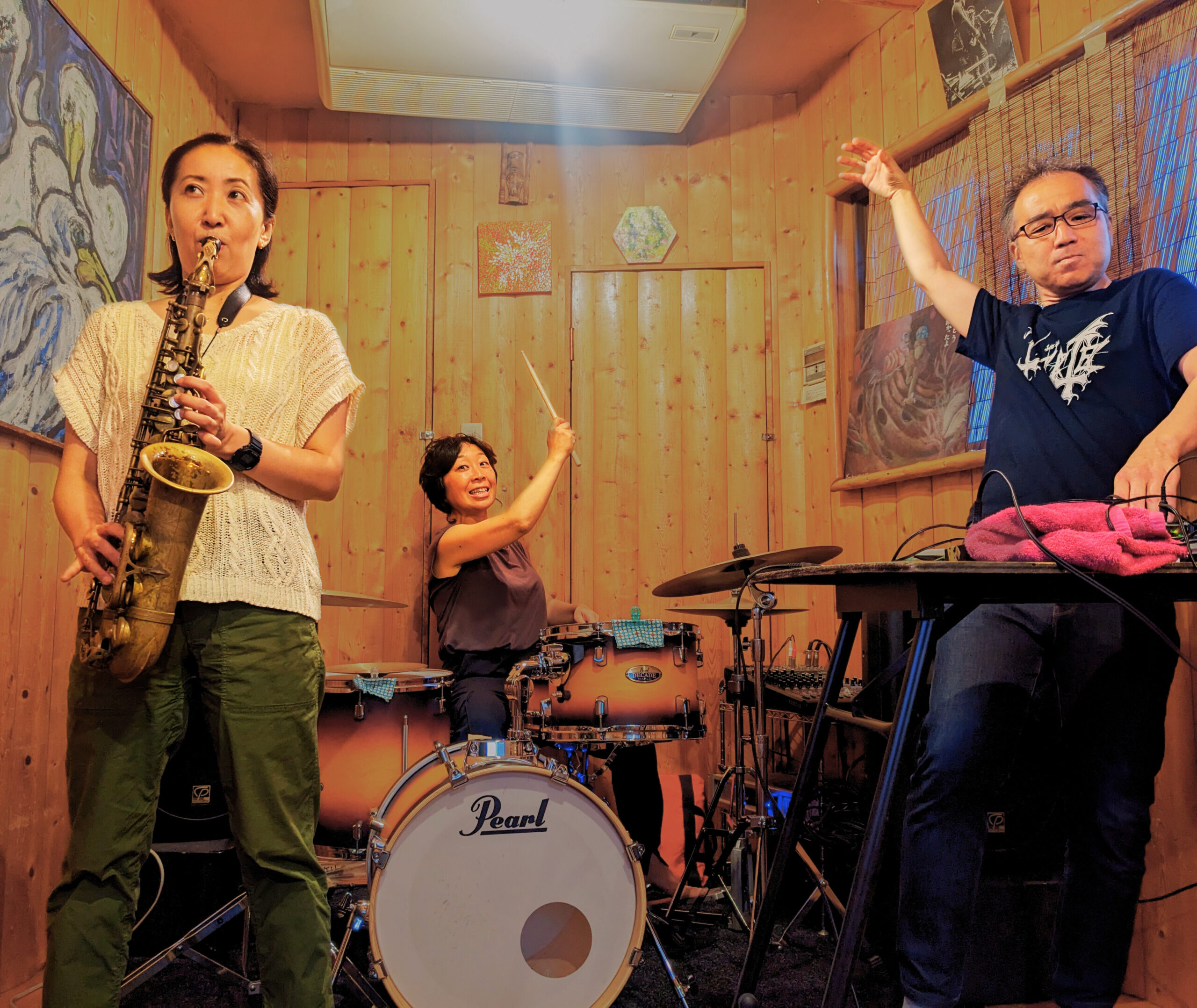
LINES with Osamu SHIKiCHI /dance and Yuko OSHIMA /drums

LINES is a unique experience of coexistence between two artists from different genres, generations, and artistic backgrounds, yet sharing a common origin.

LINES is a new project born out of a residency I carried out in Japan at Villa Kujoyama.

During my stay in Kyoto, I studied traditional Japanese singing known as nagauta (長唄) with a master. One of the goals of this apprenticeship was to enrich my drum solo Kéfukéfu with nagauta music—an art whose masters and disciples have preserved its beauty for nearly 200 years through the singularity of sound and the beauty of ma, the space that creates the groove of this music. Learning this tradition allowed me to reconnect deeply with my roots and to hear more clearly the music I wish to create.

At the same time, this experience revealed to me the complexity and the closed nature of the world of traditional Japanese culture. These realizations resonated deeply within me and led me to explore the concept of coexistence within my solo work. I firmly believe in the harmonious coexistence of tradition and modernity within this culture, as it is the only way to preserve this precious heritage and prevent it from disappearing. This conviction inspired me to collaborate with a young Japanese artist, in order to explore the lines (LINES) that exist between us and to find a form of coexistence enriched by our differences.

In this project, we are confronted with both conscious and unconscious lines—visual, auditory, sensory, and conceptual. These lines influence and shape one another by synchronizing, intertwining, including, and sometimes excluding each other.

As a musician, I focus on the lines between order and disorder, seeking a personal groove that gives the piece its temporal trajectory. The dancer, on the other hand, explores the lines between the self and the other—the self within oneself, the self within the other, and the other within oneself—while concentrating on his core artistic interest: remaining aware of the visual capture of his own reality through others. By exploring all these lines, we observe the paths they trace, their existence and appearance, and together we question the reasons for their presence.

(Yuko Oshima)

Version Français——————

LINES est une expérience unique de coexistence entre deux artistes de genres, de générations et de parcours artistiques différents, mais partageant leur origine commune.

LINES est un nouveau projet issu de la résidence que j’ai mené au Japon à la villa Kujoyama.

Lors de mon séjour à Kyoto, j’ai étudié le chant traditionnel japonais « nagauta » (長唄) avec un maitre. Un des objectifs de cet apprentissage était d’enrichir mon solo de batterie « Kéfukéfu » avec cette musique « nagauta » dont les maitres et disciples perpétuent la beauté dans leur singularité du son et aussi la beauté de ‘MA’ qui crée le groove de cette musique depuis environ 200 ans. Apprendre cette musique m’a permis de me reconnecter profondément avec mes racines et d’entendre la musique que je souhaite créer. Cependant, cette expérience m’a également fait découvrir la complexité et l’aspect fermé de l’univers de la culture traditionnelle japonaise. Ces expériences ont résonné en moi et m’ont poussé à explorer le concept de coexistence au sein de mon solo. Je crois ardemment en la coexistence harmonieuse de la tradition et de la modernité au sein de cette culture, car c’est la seule façon de préserver ce précieux héritage et de l’empêcher de disparaître. C’est pourquoi j’ai souhaité expérimenter une collaboration avec un jeune artiste japonais, afin d’explorer les lignes (LINES) qui peuvent exister entre nous et de trouver une forme de coexistence qui s’enrichit des différences.

Dans ce projet, nous sommes confrontés à des lignes conscientes et inconscientes, qu’elles soient visuelles, auditives, sensorielles ou conceptuelles. Ces lignes s’influencent et se façonnent mutuellement, en se synchronisant, en s’incluant et parfois en s’excluant.

En tant que musicienne, je me focaliserai sur les lignes entre l’ordre et le désordre, dans le but de trouver un groove personnel qui donne une ligne temporelle à la pièce. Le danseur, quant à lui, explorera les lignes entre le soi et l’autre, le soi en soi, le soi en l’autre et l’autre en soi en se focalisant sur son intérêt principal artistique ; de veiller à être conscient de la captation visuelle de sa propre réalité à travers les autres. En explorant toutes ces lignes, nous observerons les trajectoires qu’elles tracent, leur existence, leur apparence, et nous questionnerons ensemble la raison de leur présence. (Yuko Oshima)

Production – KÛ-KAN

Co production – La Fraternelle, la maison du people (Saint Claude)

Solo

SOLO / KéfuKéfu

Yuko Oshima / drums, voice, japanese bowls

一人

Using her voice and an array of drums, bows, Tibetan bowls, small metallic objects, Yuko Oshima conveys an organic, poetic and sonic landscape. Her music invites her to dig deep in simplicity and musical expression. She reconstructs her being and presence in a universe of percussion and song, which contains and reveals all the influences and unique contrasts of her homeland. Beauty and violence, purity and excess, tradition and modernity, and passion for perfection and artefact.


Seule, avec sa voix et son instrumentarium de batterie enrichi de bols tibétains, d’archets et de petits objets métalliques, Yuko dessine un paysage sonore poétique et organique. Sa musique composée de chant et de percussions lui permet de creuser la simplicité et d’y trouver un profondeur dans l’expression musicale. Elle respire l’influence de son pays d’origine qui possède des contrastes marqués, la beauté et la violence, l’épure et l’excès, le tradition et la modernité, et la passion de la perfection et l’artefact, et tout cela lui permet de reconstruire sa présence dans l’expression musicale.

©Minechika Endo